
Getin career guidance after degree completion is one of the most important things a fresh graduate can do — yet most people skip it entirely. They assume the path will become clear on its own. Sometimes it does. But more often, the weeks after graduation quietly turn into months of confusion, comparison, and missed opportunities.
If you have just finished your degree and are wondering what to do next, this guide is written specifically for you. Not to overwhelm you with options, but to give you a clear, honest, and practical roadmap for the road ahead.
Why Career Guidance After Degree Is Different From What You Expect
Most career advice is built for people who already know what they want. But the reality of life after graduation is messier than that. You may have chosen your degree based on family expectations, exam scores, or a vague idea of what sounded good at eighteen. Now, years later, you are a different person standing in front of a very different world.
Seeking career guidance after degree is not about being lost. It is about being honest. The graduates who thrive earliest are rarely the ones with the clearest plans — they are the ones willing to ask good questions, take small risks, and adjust as they learn.
The First Thing to Do After Getting Your Degree
Before updating your resume or opening a job portal, spend at least three to five days doing nothing but reflecting. This step sounds unproductive. It is actually the most valuable thing you can do.
Write down every subject, project, internship, or activity from your college years that genuinely engaged you. Then write down everything that drained you or felt like a chore even when you performed well at it. This gap between what energises you and what merely pays off tells you more about your ideal career than any aptitude test ever could.
The best career guidance after degree begins not with what the market wants — but with understanding what you actually bring, and what kind of work you can sustain over years without burning out.
Your 30-Day Career Plan After Graduation
One of the most practical pieces of career guidance after degree is this: structure your first month deliberately. Here is how.
In your first week, reflect and audit. Write down your skills, interests, and the career paths that genuinely appeal to you. Be honest, not aspirational. This is not the place to list what sounds impressive — it is the place to list what actually excites you.
In your second week, research those paths deeply. Do not just read about them online. Reach out to two or three people working in roles you find interesting. Ask them what a typical day looks like, what they wish they had known earlier, and whether they would recommend the field to someone starting out. These conversations are worth more than any amount of online research.
In your third week, prepare your materials. Update your resume to highlight your most relevant projects, internships, and achievements. Build or refresh your LinkedIn profile with a strong headline, a clear summary, and every experience worth mentioning. If you have work samples, gather them into a simple portfolio.Career Guidance After Degree
In your fourth week, begin applying with focus. Identify ten to fifteen roles that genuinely match your background and interests. Personalize each application. Follow up after a week if you have not heard back. Consistency and follow-through at this stage separate candidates who get responses from those who do not.
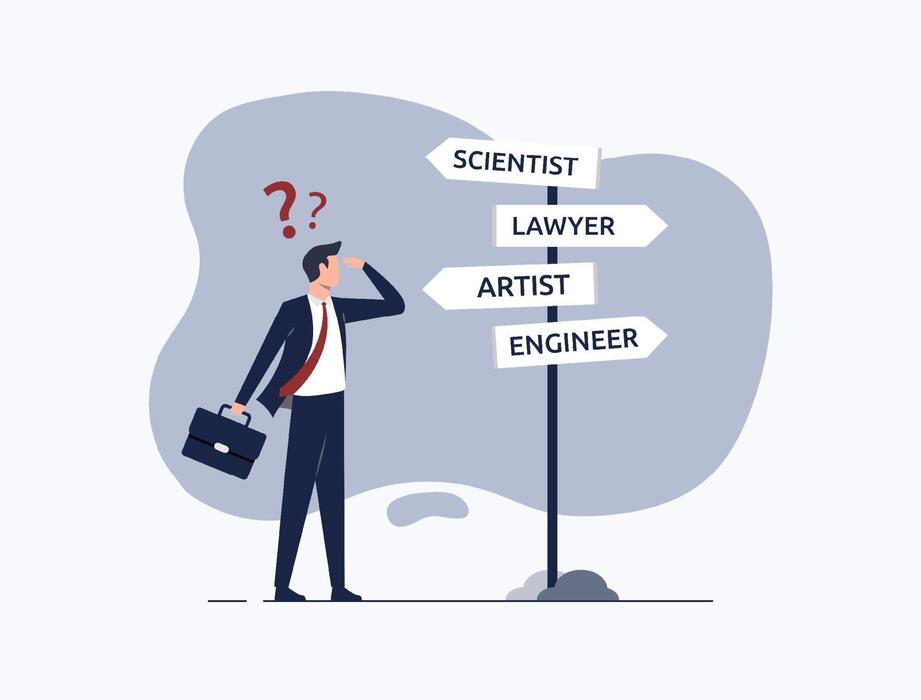
The Four Main Directions for Career Guidance After Degree
When it comes to career guidance after degree, most graduates face the same fundamental question: which direction do I go? There are four main paths, and understanding each one clearly will help you make a smarter choice.
Getting a job is the most straightforward route. It provides income, structure, real-world experience, and clarity about what you like and dislike in a working environment. Even a first job that is not your dream role will teach you things that no classroom ever could. For most graduates, especially those without a specific higher education goal in mind, entering the workforce first is the right move.
Pursuing higher education makes sense when your target career genuinely requires an advanced qualification — or when you want to shift fields significantly. An MBA, a postgraduate degree, or a professional certification can open doors that would otherwise stay closed. Career Guidance After Degree However, higher studies should always be a deliberate strategic decision, not a way to postpone the discomfort of job hunting.
Freelancing or entrepreneurship is a legitimate and increasingly common path after graduation. If you have a skill that the market values — writing, design, coding, marketing, tutoring — you can begin building an independent income almost immediately. This path demands self-discipline and comfort with uncertainty, but it also offers a speed of learning and autonomy that traditional employment rarely provides in the early years.
Skilling up before entering the market is a smart strategy if you feel your current qualifications are not strong enough to compete in the roles you actually want. Spending three to six months developing a specific, in-demand skill before applying can dramatically improve the quality of your applications and your confidence in interviews.
Practical Career Guidance After Degree: Five Steps That Actually Work
Step one: Treat your network as your most valuable asset. The single best career guidance after degree anyone can give you is this — your connections matter more than your resume. Reach out to college seniors, professors, alumni, and even acquaintances working in fields you are interested in. A referral or a warm introduction will open doors that a hundred cold applications cannot. People are surprisingly willing to help when you approach them with genuine curiosity rather than desperation.
Step two: Build depth in one specific skill. Fresh graduates who present themselves as good at everything tend to stand out at nothing. Choose one area — data analysis, content creation, programming, sales, or design — and invest sixty to ninety focused days into building real, demonstrable competence. That focus will make every application you send meaningfully stronger.
Step three: Apply with quality, not volume. One of the most damaging pieces of career advice floating around is that you should apply to as many jobs as possible. In reality, a thoughtful, personalized application to a role you genuinely fit will almost always outperform fifty generic ones. Career Guidance After Degree Read the job description carefully. Understand what the company does and why it matters. Explain specifically what you bring to that role. That specificity is what gets responses.
Step four: Create daily structure for yourself. Without the rhythm of college, time after graduation can disappear quickly and without much to show for it. Build a simple daily routine — skill development in the morning, job applications and follow-ups in the afternoon, reading or networking in the evening. Routine is what sustains your momentum on the inevitable days when motivation is nowhere to be found.
Step five: Follow up on everything. Most graduates apply and then wait in silence. Following up — once, professionally, about a week after applying or interviewing — signals initiative and keeps you visible. A brief, polite follow-up email has changed the outcome of many hiring decisions.
Common Mistakes to Avoid When Seeking Career Guidance After Degree
Waiting for perfect before taking any action. Career guidance after degree is not about finding the perfect path before you move. It is about taking the best available next step and learning from it. Graduates who wait for perfect conditions often find that the people who started imperfectly have already built six months of experience ahead of them.
Comparing your timeline to everyone else’s. Social media makes it look like every classmate has a job, a plan, and complete certainty about the future. They do not. Hiring timelines vary enormously by industry, city, and role. Your timeline is your own — protect your focus by measuring your progress against your own goals, not other people’s announcements.
Ignoring personal branding online. In today’s hiring environment, a strong LinkedIn profile is not optional. Recruiters search for freshers daily. If your profile is incomplete or inactive, you are invisible to opportunities that could have come to you without a single application.
Valuing only salary in the early years. The quality of mentorship, the speed of learning, the culture of your first workplace, and the relevance of the work to your long-term goals are all worth far more in the early career stage than a marginally higher salary. Choose your first role for growth, not just pay
The Honest Truth About Career Guidance After Degree
Here is what nobody tells you clearly enough: there is no single correct path after graduation. Career guidance after degree is not a one-size-fits-all formula. It is a process of honest self-assessment, deliberate exploration, small experiments, and gradual refinement.
The graduates who build careers they are genuinely proud of are not the ones who had everything figured out on day one. They are the ones who stayed curious, stayed consistent, asked for help when they needed it, and kept moving even when the direction was not perfectly clear.
Your degree got you to the starting line. What you do in the next twelve months will shape the decade that follows. Start with one honest step — and keep going.